US EPA
Is radon really bad for you?
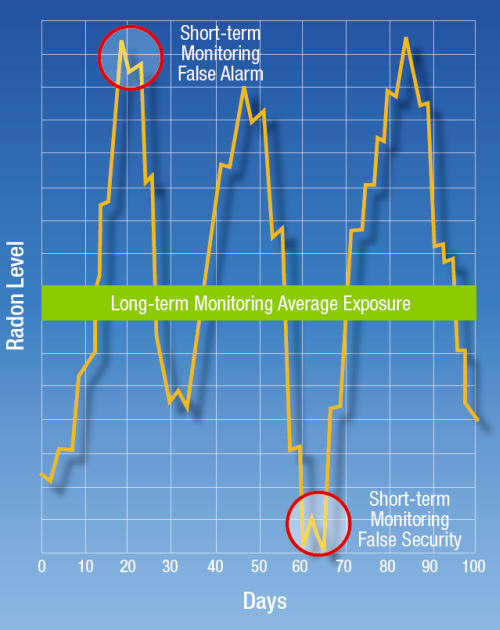
Breathing radon over time increases your risk of lung cancer. Radon is the second leading cause of lung cancer in the United States. Nationally, the EPA estimates that about 21,000 people die each year from radon-related lung cancer. Only smoking causes more lung cancer deaths.
Researches performed at the University of Iowa have helped show that radon is the second leading source of lung cancer cells as well as the leading environmental cause of cancer fatalities in the USA. You can't anticipate how much radon will certainly remain in your home unless you have it checked. Individuals that reside on the 3rd flooring or greater in an apartment can be certain that their degrees are reduced, yet the EPA as well as the Surgeon General advise testing for everybody else.
Many health and wellness and also radiation experts concur that while a tiny portion of granite kitchen counters might release increased levels of radon, many counter tops produce extremely reduced degrees. According to the United States Epa (EPA), it's really unlikely that a granite counter top in a home would increase the radiation degree above the normal, all-natural history level that originates from nearby dirt and also rocks. Still, individuals concerned about radon from countertops as well as from various other home resources can check these levels making use of home discovery kits or can hire an expert to do the screening (see the area "Exactly how can I avoid exposure to radon?"). The words radon examination "stopped working" or radon test "passed" are sprayed available.
Is radon mitigation really necessary?
When radon gas enters the body, it exposes the lungs to small amounts of radiation. In small quantities, experts say this is harmless. However, in persistent exposures or larger quantities, radon can damage the cells of the lining of the lungs, increasing a person's chance of developing lung cancer.
The US EPA has placed it clearly, stating, "Any kind of radon direct exposure has some threat of causing lung cancer. Radon gas is a naturally-occurring byproduct of the contaminated decay of Uranium in the dirt. Depending upon your geographical area, the radon degrees of the air you breathe outside of your house might be as high as 0.75 pCi/L.
- Your threat of lung cancer boosts substantially with exposure to greater radon levels.
- Lung cancer risk increases 16% per 2.7 pCi/L increase in radon direct exposure.
- Radon gas is a naturally-occurring by-product of the contaminated degeneration of Uranium in the dirt.
- Relying on your geographic location, the radon degrees of the air you take a breath beyond your house may be as high as 0.75 pCi/L.
- The nationwide average of outdoors radon levels is 0.4 pCi/L and also it is estimated by the National Academy of Sciences that outdoor radon levels cause roughly 800 of the 21,000 radon induced lung cancer fatalities in the United States every year.
- The US EPA has placed it plainly, stating, "Any type of radon exposure has some danger of creating lung cancer.
How do you eliminate radon?
Possible symptoms include shortness of breath (difficulty breathing), a new or worsening cough, pain or tightness in the chest, hoarseness, or trouble swallowing. If you smoke and you know you've been exposed to high levels of radon, it's very important to quit smoking.
The EPA recommends doing a second examination to verify the first searchings for if the test results indicate radon degrees at or over 4 pCi/L (picocuries per litre). Homeowners can take steps to decrease the radon focus if the average of the 2 temporary radon tests is 4 pCi/L or greater. The EPA notes that because there is no secure level of radon gas exposure, reducing radon to listed below 2 pCi/L additionally helps in reducing the number of radon-related lung cancers. Take a breath enough radon for many years, and also it can boost your risk of lung cancer.
What are the symptoms of radon in your home?
If a person has been exposed to radon, 75 percent of the radon progeny in lungs will become "harmless" lead particles after 44 years. When an alpha particle damages a cell to make it cancerous, the onset of lung cancer takes a minimum of 5 years but most often 15 to 25 years, and even longer.
You cant understand whether your home has undesirable degrees of the gas unless you have actually the air examined due to the fact that you cant see or scent radon. Nevertheless, if tests show that radon is placing you and also your family members in jeopardy, you can take some simple Additional hints steps to clear the air.
How long does it take for radon to cause cancer?
Fact: You will reduce your risk of lung cancer when you reduce radon levels, even if you've lived with an elevated radon level for a long time. Keep in mind that radon levels below 4 pCi/L still pose some risk and that radon levels can be reduced to 2 pCi/L or below in most homes.