What is radon gas? Is it harmful?
Is radon really bad for you?
Breathing radon over time increases your risk of https://Radon1.com lung cancer. Radon is the second leading cause of lung cancer in the United States. Nationally, the EPA estimates that about 21,000 people die each year from radon-related lung cancer. Only smoking causes more lung cancer deaths.
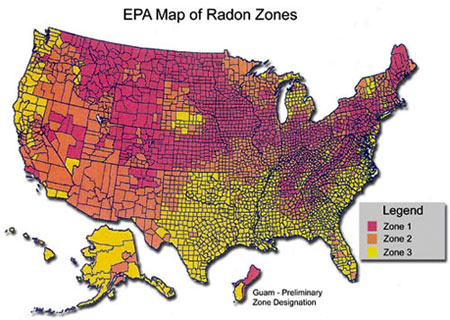
The initial step in mitigation is evaluating to see if the indoor-air and/or residential water radon focus need to be lowered. The Globe Health Company's International Radon Project has actually suggested an action level of 100 Bq/m3 (2.7 pCi/l) for radon in the air.
Researchers focused on 2,500 Finns that had actually stayed in the exact same residences-- having reduced to high interior radon levels-- for 20 years; they took care to change for cigarette smoking. " Our outcomes do not show boosted danger of lung cancer from indoor radon." The study suggests that indoor radon exposure does not seem an important cause of lung cancer cells. Radon is a radioactive gas sent out naturally from the ground.
Is radon mitigation really necessary?
When radon gas enters the body, it exposes the lungs to small amounts of radiation. In small quantities, experts say this is harmless. However, in persistent exposures or larger quantities, radon can damage the cells of the lining of the lungs, increasing a person's chance of developing lung cancer.
This is the degree of around 90 percent of residences in the United States. The EPA advises that homeowners do something about it when direct exposure levels reach over 4 picoCuries per liter, as a result of the idea that enhancing radon exposure is associated to a progressively better risk for cancer. Around one in 15 houses in the USA has raised radon levels. The odor-free gas can go into houses via splits in floors, foundations as well as wall surfaces.
- Your risk of lung cancer cells raises substantially with exposure to greater radon degrees.
- Lung cancer threat climbs 16% per 2.7 pCi/L boost in radon direct exposure.
- Radon gas is a naturally-occurring result of the radioactive degeneration of Uranium in the soil.
- Depending upon your geographic area, the radon levels of the air you take a breath beyond your house might be as high as 0.75 pCi/L.
- The United States EPA has actually put it simply, stating, "Any kind of radon direct exposure has some danger of causing lung cancer cells.
The important things to bear in mind is that the threat for lung cancer from radon is random and defies data. Individuals may be revealed for a lifetime at extremely high degrees without obtaining lung cancer cells, while others might be exposed at moderate degrees for a year or 2 and also contract lung cancer cells. Radon is one of minority environmental hazards we have some control over. Many individuals fear that if a radon examination shows high levels in a particular home, that the residence is somehow tainted as well as cheapened.
What are the symptoms of radon in your home?
If a person has been exposed to radon, 75 percent of the radon progeny in lungs will become "harmless" lead particles after 44 years. When an alpha particle damages a cell to make it cancerous, the onset of lung cancer takes a minimum of 5 years but most often 15 to 25 years, and even longer.

The research study paid close attention to the cohort's levels of smoking cigarettes, job-related exposure to health hazards as well as education and learning achievement. Nonetheless, unlike most of the domestic radon researches, the research was not population-based.
How long does it take for radon to cause cancer?
Fact: You will reduce your risk of lung cancer when you reduce radon levels, even if you've lived with an elevated radon level for a long time. Keep in mind that radon levels below 4 pCi/L still pose some risk and that radon levels can be reduced to 2 pCi/L or below in most homes.